Can Smoking Cause Gum Disease?
We all know the standard warnings about smoking. From a young age, we are reminded of how tobacco affects our lungs, our hearts, and our overall physical health. Most people are also well aware of the cosmetic issues that come with tobacco use, such as dark stains on your enamel, yellowed fingernails, and chronic bad breath that never seems to clear up, even after using mints or mouthwash.
But there is a far more serious threat to your mouth that does not get nearly as much attention as it should. Tobacco use is actually one of the most significant risk factors for developing severe gum disease.
What makes this connection so dangerous is how quietly it happens. Smoking does not just increase your chances of developing an oral infection. It actively changes the environment inside your mouth, making it easier for harmful bacteria to thrive while simultaneously weakening your body's natural ability to fight back.
At Family Dental of Pelham, we regularly visit with patients who are surprised to learn how directly tobacco use impacts the structural stability of their teeth. Understanding the science behind this link can help you take proactive control of your oral health before the damage becomes irreversible.
How Tobacco Alters Your Mouth Beneath the Surface
To understand why smoking is so hard on your gums, it helps to look at what happens to your tissues whenever you inhale tobacco smoke. Your mouth relies on a very rich, healthy supply of blood to deliver oxygen and vital nutrients to your gum tissue. This constant supply of oxygen keeps the tissue strong, resilient, and capable of repairing itself from daily wear and tear.
When you smoke, the nicotine and chemicals entering your system cause your blood vessels to constrict or narrow. This narrowing significantly reduces the amount of blood flow reaching your gums. Without a steady stream of oxygenated blood, your gum tissues are essentially starved of the nutrients they need to stay healthy.
This lack of blood flow also means that your immune system cannot deliver white blood cells to your gums efficiently. White blood cells are your body's primary defense against infections. When bacteria begin to build up along your teeth, a non-smoker's body can immediately launch a strong immune response to neutralize the threat.
For a smoker, that defensive response is severely compromised. The bacteria are given a free pass to multiply, attach to the teeth, and slip beneath the gumline without facing much resistance from your immune system.
The Masking Effect: Why Smoking Hides the Early Warning Signs
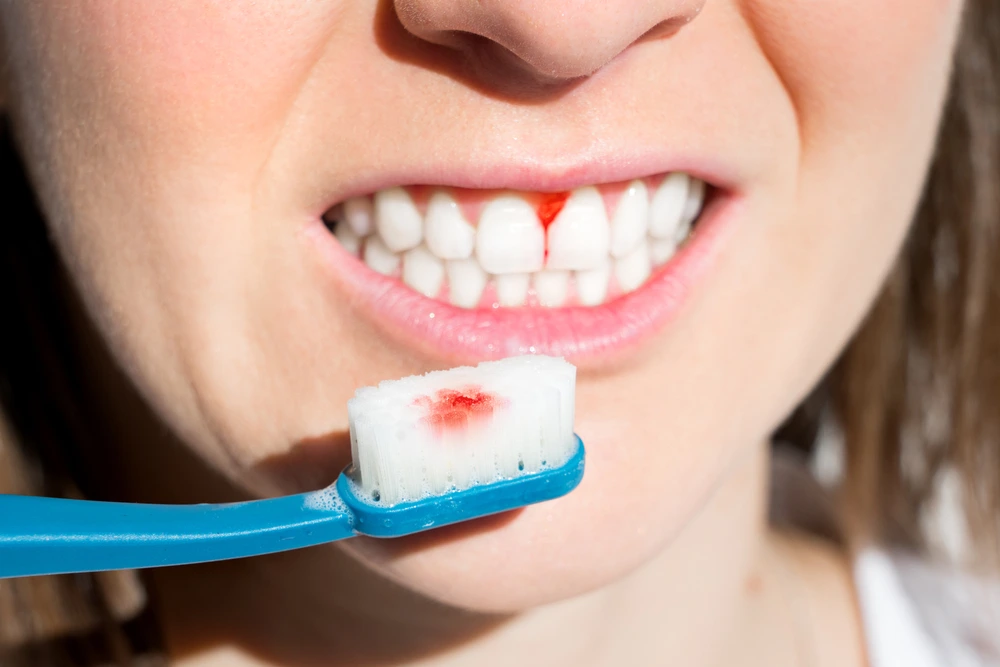
In a typical mouth, the very earliest stage of gum disease, known as gingivitis, comes with very clear warning signs. Most people notice that their gums look bright red, feel swollen, and bleed easily when they brush or floss. This bleeding is actually a helpful alarm system. It tells you that bacteria are irritating the tissue and that you need to step up your routine or see a professional.
For individuals who smoke, this alarm system is often completely broken. Because nicotine constricts the blood vessels, your gums are far less likely to bleed, even if they are facing a massive bacterial infection. Your gums might look pale, firm, and seemingly healthy on the surface, masking a deep infection that is actively spreading underneath.
This masking effect is why many smokers do not realize they have a problem until the disease has already progressed into a more advanced stage. You might assume everything is perfectly fine because you do not see any blood in the sink, while underneath the surface, the chronic lack of oxygen is allowing destructive bacteria to damage the deeper structures of your jaw.
The Progression to Advanced Damage and Stability Loss
When an oral infection goes unnoticed and unmanaged, it eventually transitions from mild inflammation into a serious condition called periodontitis. In this stage, the soft plaque on your teeth hardens into a dense substance called tartar or calculus. Tartar cannot be removed with a regular toothbrush at home. It acts as a permanent shelter for bacteria, forcing your gums to gradually pull away from your teeth.
As these spaces or pockets grow deeper, the bacteria begin to attack the delicate ligaments and the actual bone that holds your teeth in place. For smokers, this bone destruction happens at a significantly accelerated rate compared to non-smokers. Clinical studies suggest that tobacco users may experience up to three to four times more bone loss over time than those who do not smoke.
As the bone dissolves away, your teeth lose their structural support system. They might begin to drift out of position, tilt when you chew, or feel loose when you bite down. If the infection is left to run its course, the teeth can become so unstable that they either fall out on their own or require a professional extraction to save the health of the rest of your mouth.
For individuals who find themselves dealing with this stage of the infection, seeking out professional periodontal treatment in Pelham, NH is a vital step to halt the damage before all stability is lost.
Why Treatments Are More Challenging for Smokers
Smoking does not just cause gum issues; it also makes treating the condition much more complicated. The ultimate goal of any professional gum therapy, whether it is a deep cleaning or a more advanced structural procedure, is to eliminate the bacteria and allow your tissues to naturally heal and reattach to the roots of your teeth.
Because tobacco use keeps your blood vessels constricted and lowers your immune response, your body's natural healing capacity is severely slowed down. After a treatment, a smoker's mouth simply cannot repair itself as quickly or as effectively as a non-smoker's mouth would. This slower healing rate increases the risk that the infection will persist or return shortly after therapy is complete.
This issue also extends to tooth replacement options. If a smoker experiences tooth loss and wishes to explore dental implants, the failure rate for those implants is notably higher if tobacco use continues. Implants rely on a process where your natural bone fuses directly with a titanium post. Without healthy blood flow and strong bone density, that fusion is much harder for your body to achieve safely.
Reclaiming Your Health: The Power of Quitting
The reality of how tobacco impacts your smile can sound intimidating, but there is an incredible amount of hope built into this situation. Your body possesses an amazing capacity to heal itself once the constant strain of tobacco smoke is removed.
The very moment you choose to reduce or completely quit smoking, your blood circulation begins to improve. Over the course of several weeks and months, the oxygen levels in your gum tissues will naturally return to normal. Your immune system will regain its ability to fight off oral bacteria, and your body will become far more responsive to dental treatments.
Quitting tobacco is a challenging journey, and it often requires a combination of personal commitment, lifestyle changes, and support from healthcare professionals. When you decide to make this change, you are doing so much more than just protecting your lungs; you are actively saving the foundation of your smile.
Partner with Family Dental of Pelham for Your Care
Navigating your oral health journey requires a supportive, experienced team that understands your unique challenges. At Family Dental of Pelham, we are fully committed to providing compassionate, comprehensive care to help you restore and protect your smile. We understand that tobacco use is a complex habit, and we focus entirely on providing a judgment-free environment where you can get the honest answers and gentle care you deserve. Whether you are ready to explore ways to protect your gums or need a detailed evaluation to address existing issues, we are here to walk alongside you every step of the way. Contact our Pelham office today to schedule your consultation, and let us work together to keep your smile healthy and strong for years to come.
Frequently Asked Questions
Q: Does smoking e-cigarettes or vaping cause the same gum problems?
A: While vaping does not produce the same toxic smoke as traditional cigarettes, most e-cigarettes still contain significant amounts of nicotine. Nicotine is the specific ingredient responsible for constricting your blood vessels and reducing blood flow to your gums. Because of this, vaping can still mask the symptoms of gum disease, lower your immune defense, and increase your risk for oral infections.
Q: Can a professional dental cleaning reverse the damage caused by smoking?
A: A professional deep cleaning can effectively clear away the hardened tartar and bacteria hidden beneath your gumline, which stops the active infection from spreading. However, if smoking has already caused your jawbone to dissolve away, that lost bone cannot naturally grow back on its own. The treatment is designed to freeze the disease in place and protect the remaining structure.
Q: How can I tell if I have gum disease if my gums do not bleed when I smoke?
A: Since bleeding is often masked by tobacco use, you will need to look for other subtle indicators. Common warning signs include a persistent bad taste or odor in your mouth, gums that appear to be pulling away from your teeth, or teeth that feel slightly loose or sensitive when you chew. The most reliable way to find out is through a professional evaluation where a dentist can measure the deep pockets around your teeth.
Call Family Dental of Pelham today at (603) 635-2146 to schedule your dental consultation with Dr. Ruchieka Vij and Dr. Hitesh Vij. You may also email us at dentist@familydentalofpelham.com if you have any questions.
We proudly serve families across Lowell, Nashua, Lawrence, Haverhill, Merrimack, Tewksbury, Derry, Londonderry, Salem, Dracut, Hudson, Pelham, Tyngsborough, Methuen, Windham, and Litchfield.
A healthy smile builds confidence and comfort—and you deserve care that lasts a lifetime.
This form is for contact purposes only. Please do not share personal health information (PHI). We will call you to discuss your medical condition We will call you to discuss your medical condition, and we will address your concerns during your visit.

Monday: 8 AM - 5 PM
Tuesday: 8 AM - 5 PM
Wednesday: 8 AM - 5 PM
Thursday: 8 AM - 5 PM
Friday–Sunday: Closed

Call Us (603) 635-2146

Phone
Have dental questions? We are just a phone call away and ready to provide the answers you need.

Compassionate Care Meets Advanced Dentistry. Reserve your visit and take the first step toward a healthier smile.


©2026 Family Dental of Pelham. All Rights reserved | Privacy Policy | Digital Marketing by Remedo